
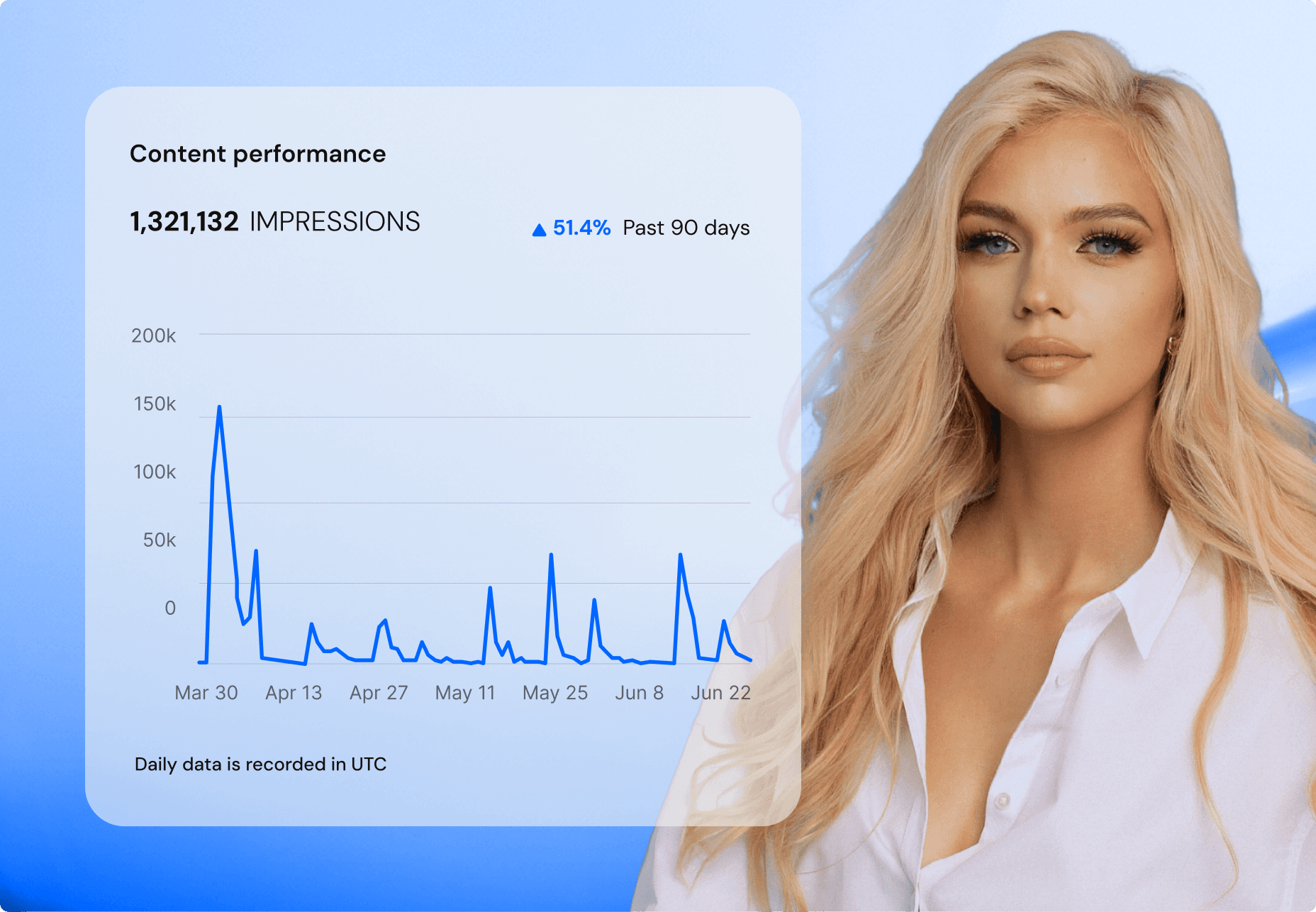
Challenge
To become a recognised thought leader among VCs and investors, turning that reputation into consistent dealflow for her fund and partnerships with top-tier firms.
Results
Grew LinkedIn from around 20,000 to 58,000+ followers
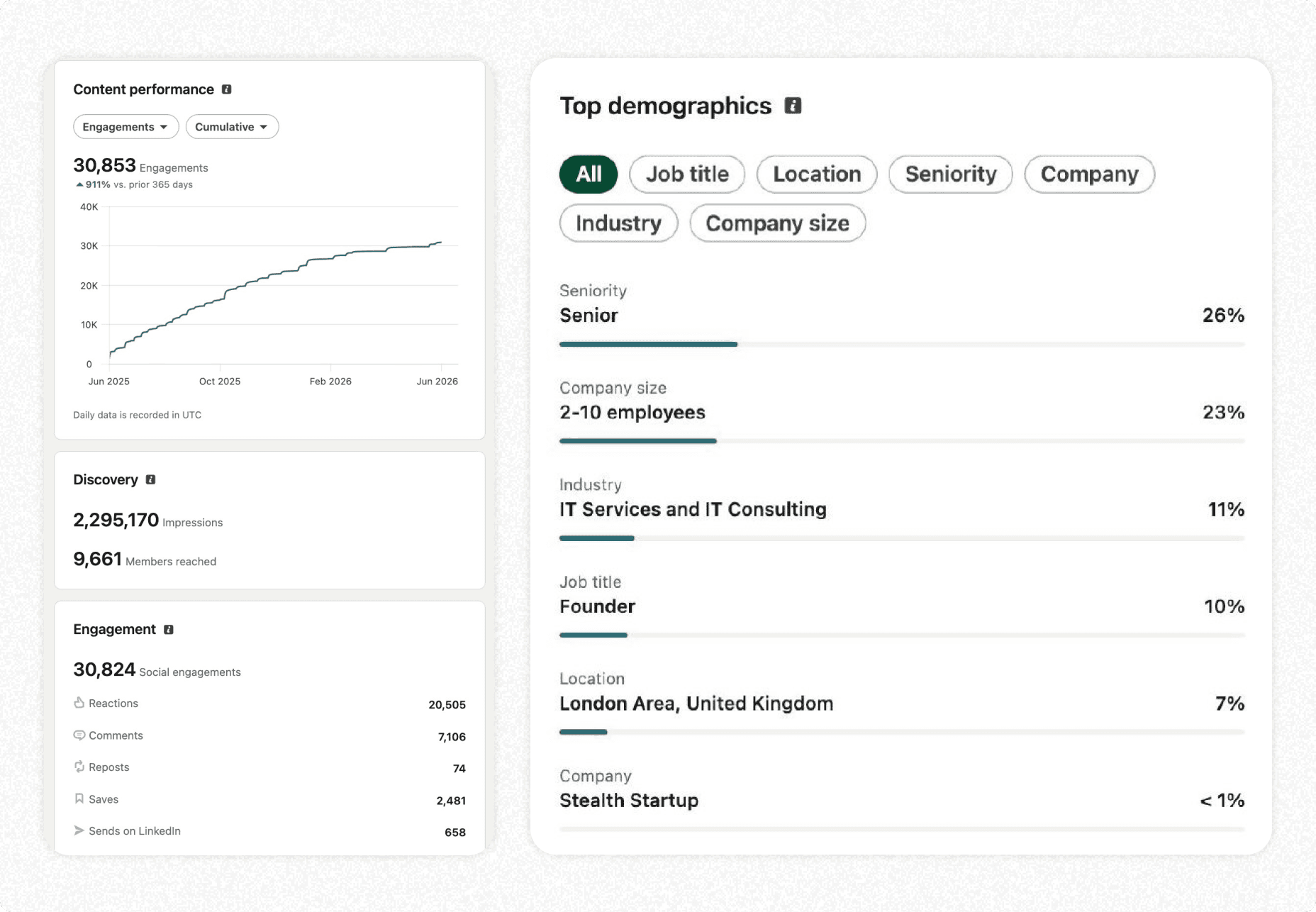
2,373,944 LinkedIn impressions
620,692 LinkedIn members reached
300+ investment opportunities sourced through inbound activity
About the Client
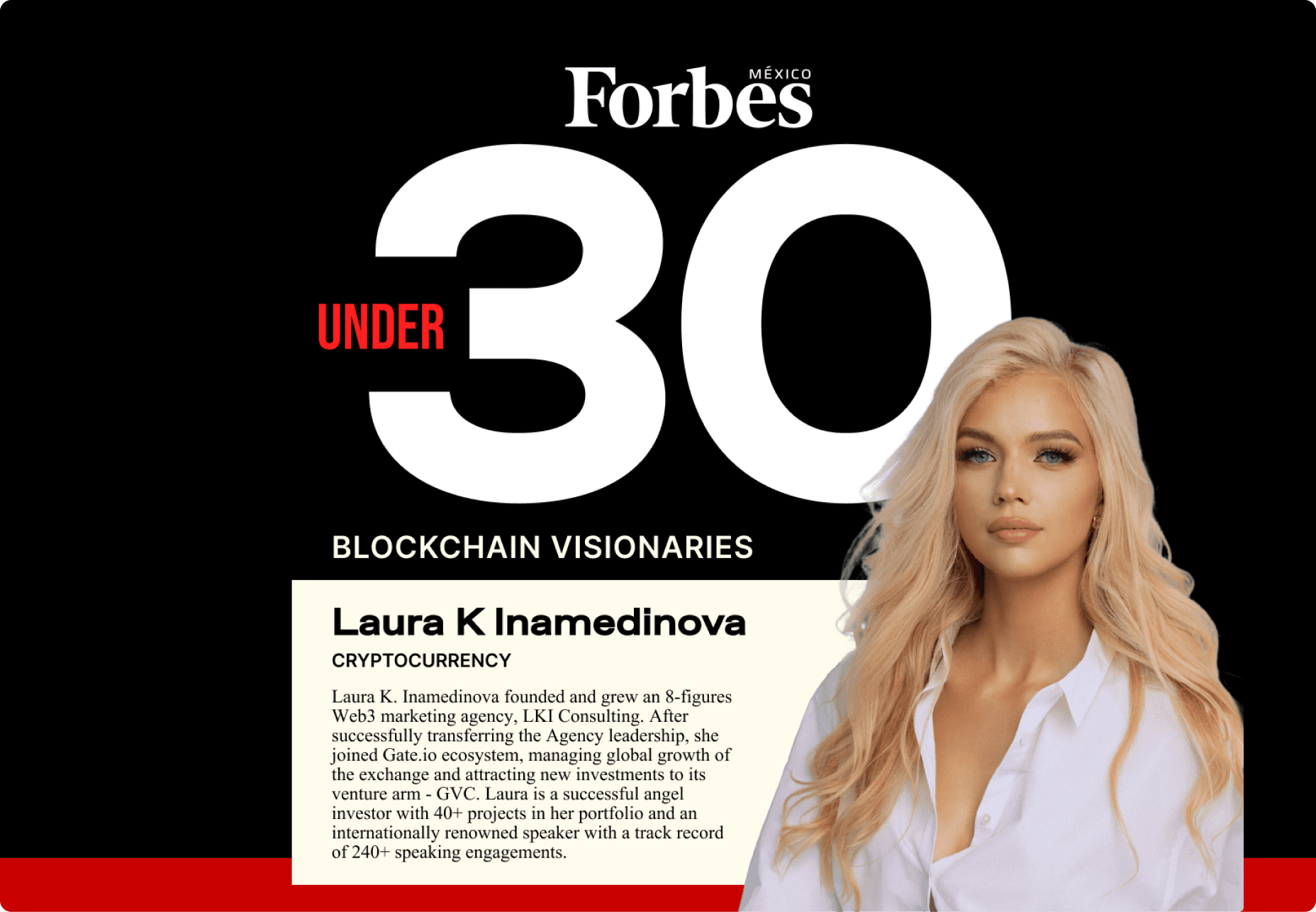
Laura K. Inamedinova is an award-winning entrepreneur and early-stage investor backing category-defining projects across Web3 and AI, with a portfolio of more than 40 investments including Pixelverse, Humanity Protocol, Sapien and Cookie3. She began her career in venture capital as a co-founding Partner at Illuminati Capital, a $50M fund, before going on to hold a dual role at Gate.com as Chief Global Ecosystem Officer and Principal at Gate Ventures. Her work has earned recognition including Forbes 30 Under 30 and "Top 10 Women Entrepreneurs" by Entrepreneur Magazine. Laura wanted to turn her personal credibility into a public platform that could generate inbound opportunities on its own.
Goals
Primary: Leverage LinkedIn as a channel for sourcing leads. Attract inbound increase from pre-seed / seed founders.
Secondary:
Grow Laura's LinkedIn presence from 20k to 50k+ followers
Secure organic / paid speaking slots at leading Web3 / VC / Tech events across multiple regions.
Place Laura in media and podcast interviews that reach audiences beyond her existing network.
Solution
We built Laura's public presence across four connected stages: LinkedIn growth, events and speakerships, media & podcasts and panel discussions.
Stage 1. LinkedIn growth
Speaking slots, panel discussions and press placements each created a moment of visibility. Content is what turned that moment into a following, and a following that keeps checking back is what made 300+ inbound deals possible instead of just one-off spikes in profile views.
Posts were built around five recurring themes rather than random updates:
Pre-event announcements: posted ahead of a conference or panel with a designed graphic and the session details, date, time, location, and who else is speaking. These built anticipation before the event happened and gave Laura's network a reason to attend or watch live, rather than finding out about it after the fact.
Deal-evaluation breakdowns: walking through how a specific type of deal gets assessed, the lane her panel and speaking content had already established.
Recaps from stage and panel appearances: turning a single event into several posts instead of one, so a 15-minute panel kept generating visibility for days after.
Market commentary tied to big events: funding rounds, downturns, industry shifts, posted while the topic was still active in the feed rather than after interest had moved on.
Direct founder-facing posts: stating plainly what she looks for in a pitch, the specific content type founders reference when explaining why they reached out.
Why long-form: LinkedIn's own reach mechanics favour posts that hold attention past the first two lines, and a platform audience of VCs and founders responds better to a real argument than a one-line take. Short posts were used for pre-event announcements; longer posts were reserved for deal-evaluation and market commentary, where the length itself signalled she had something substantive to say.
Posting frequency: Long-form posts, deal-evaluation breakdowns and market commentary, went out once a week, giving each one room to be read properly. Shorter posts, pre-event announcements and recaps, ran in parallel around whatever was happening that week. The once-a-week long-form post stayed the anchor that kept people following between events, while the shorter posts kept the profile active in between.
Stage 2. Events and speakerships
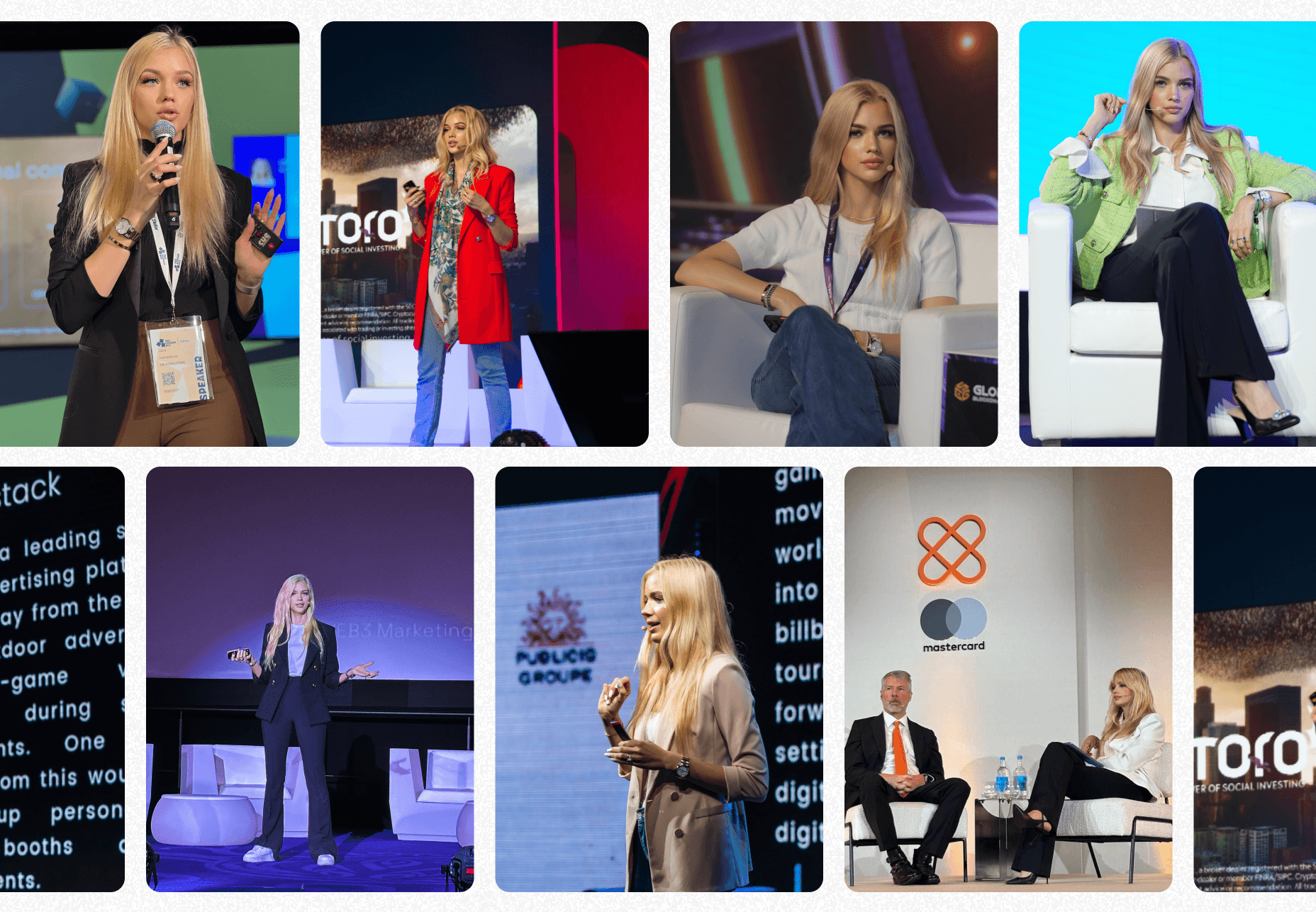
LKI positioned Laura's speaking topics around fundraising, deal evaluation and investor decision-making, rather than general market commentary. Keynotes focused on VC playbooks and fundraising trends, panels covered token economics and investor relations, and workshops taught founders how to pitch and what investors actually look for before writing a check. Every topic tied back to the same message: Laura is someone who evaluates deals, not just someone who comments on the market - which was the main goal.
So event selection followed the same logic and LKI prioritised events with strong founder and investor turnout, summits, ecosystem forums, closed-door investor sessions, over general crypto expos with high attendee counts but low relevance to dealflow.
This built a speaking history of 297+ conferences across 25+ countries over nine years, with recurring roles as keynote speaker, panel moderator, panelist and event MC. Roles included judging live pitch sessions at industry conferences, giving Laura direct visibility into deal evaluation on stage, not just as a speaker but as someone assessing the same kind of opportunities her fund would consider.
Stage 3. Media & podcasts
LKI placed Laura across a mix of publications and podcasts, but the selection wasn't random; each outlet type served a different part of the dealflow goal.
20+ media and podcast placements
Outlets included Cointelegraph, Bitcoin.com, Huffington Post, DailyCoin, Coin Edition, BeInCrypto and CoinRock Media
Podcast features included Founder's Story, Arcanum Ventures and Gamma Prime.
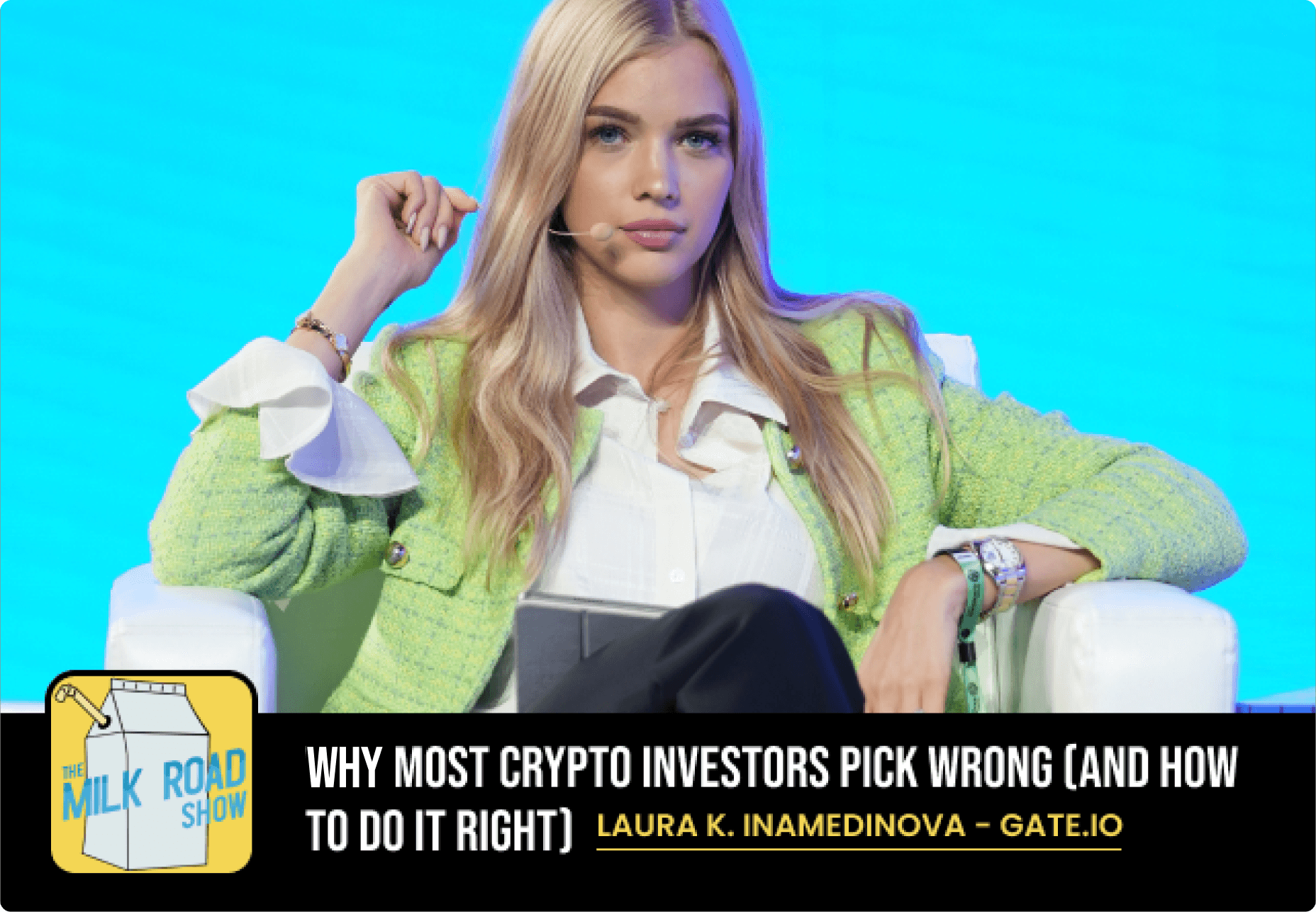
Long-form podcasts for founder trust: Founder's Story and Arcanum Ventures run long, conversational interviews rather than quick news hits. That format matters for a founder deciding whether to pitch someone: a five-minute soundbite tells them nothing about how an investor thinks, but a 40-minute conversation lets Laura walk through how she actually evaluates a deal, in her own words, unscripted. Founders researching her before reaching out get something closer to a live pitch meeting than a press quote.
Written press for the VC-to-VC signal: Pieces like "Retail vs. Venture Capital: Laura Inamedinova on Lessons From the Investment Frontlines" and "Future of Web3 Venture Capital: What to Expect in 2025" run on outlets other VCs and funds actually read. This wasn't about reaching the biggest audience, it was about being visible to the specific, smaller audience of people who co-invest and pass deals along.
PR and comms features for a second audience: Articles like "PR expert Laura K. Inamedinova's top 5 advice on maximising press for tech" on ARYZE reached a marketing and comms audience outside crypto entirely. Founders often ask their comms or marketing lead who to pitch first, so having Laura visible in that world too meant referrals could come from people who aren't investors themselves.
Recognition-driven profiles for third-party validation: Coin Edition's feature tying her to the Top 10 Women Entrepreneurs list, and Entrepreneur Magazine's own coverage, did something the other placements couldn't: they had someone else vouch for her credibility, rather than Laura stating it herself. That kind of third-party validation carries more weight with a founder who's never met her.
Stage 4. Organizing panel discussions
LKI organised and placed Laura in panel sessions across X Spaces, most often as moderator, giving her control over the questions asked.
56+ panel discussions in total
Moderated more than 30 of them, over half
Reached more than 1.2 million cumulative listeners across all sessions
Session partners included some of the industry's most recognised funds and firms:
HashKey Capital
Fenbushi Capital
BITKRAFT Ventures
Hivemind Capital
VanEck
JPMorgan Chase & Co.
Alongside a steady run of active Web3 VCs including Quantix Capital, Mechanism Capital and Outliers Ventures
Key findings
LinkedIn followers grew from around 20,000 to 58,000+.
2,373,944 impressions and 620,692 members reached.
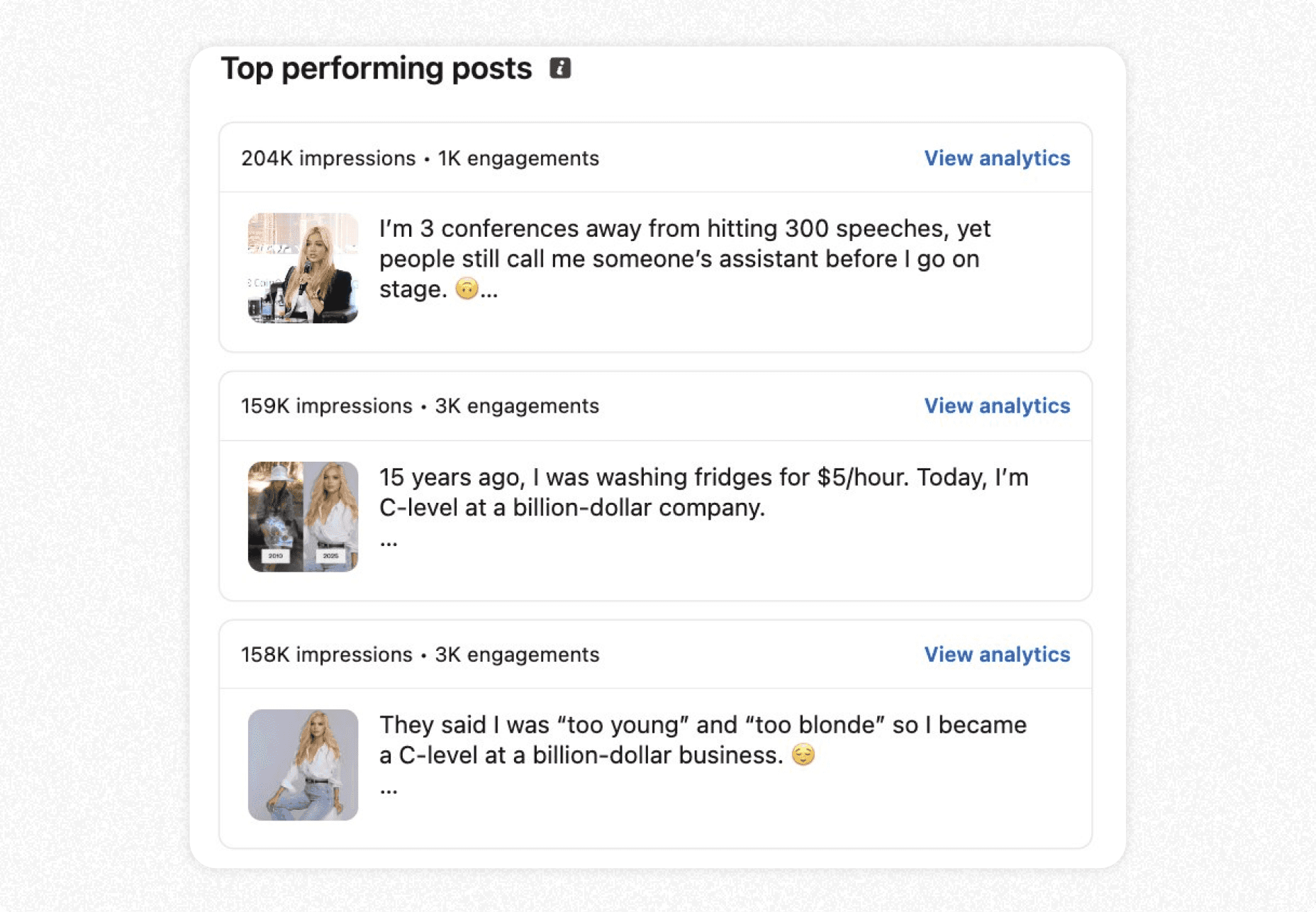
Deal-evaluation and founder-facing posts consistently outperformed general market commentary, the pillar most directly tied to the 300+ inbound deals it helped generate.
Pre-event and recap posts together meant a single conference appearance generated visibility before, during and after the event.


